The Best Meal Logging App in 2026 (Photo, Voice, Text, Barcode)

Here's the truth about meal logging apps: the only one that works is the one you'll still be using on day 14. Every other measure — database size, macro breakdown, pretty charts — is downstream of that. And the single thing that determines whether you're still logging on day 14 is how long it takes to log one meal.
In 2026, the right number is 10 seconds. If your meal logging app takes two minutes per entry, you've already quit — you just haven't admitted it yet.
Why Meal Logging Apps Fail Within a Week
Here's the quit spiral that happens in almost every nutrition app. Day 1: you log breakfast, lunch, and dinner. Day 2: you log breakfast and lunch but skip dinner because it was a weird leftover combination and the database doesn't have it. Day 3: you log only breakfast. Day 4: you open the app, see the missing entries from yesterday, feel guilty, and close it. Day 7: you uninstall.
The industry-wide abandonment rate for nutrition tracking apps is about 90% within two weeks. That's not a motivation problem on your side. It's a user-interface problem on theirs.
The apps you've probably tried are mostly built around one method: search a database, tap through 4-6 screens, adjust portions. MyFitnessPal pioneered this pattern in 2010, and almost every competitor copied it. It works fine for one meal. It falls apart when you realize you have to do it 84 times a week.
The Four Ways to Log a Meal in 2026
A real meal logging app gives you multiple input methods and lets you pick the fastest one for the situation. Different meals call for different inputs. Here's the full toolkit.
1. Photo Logging
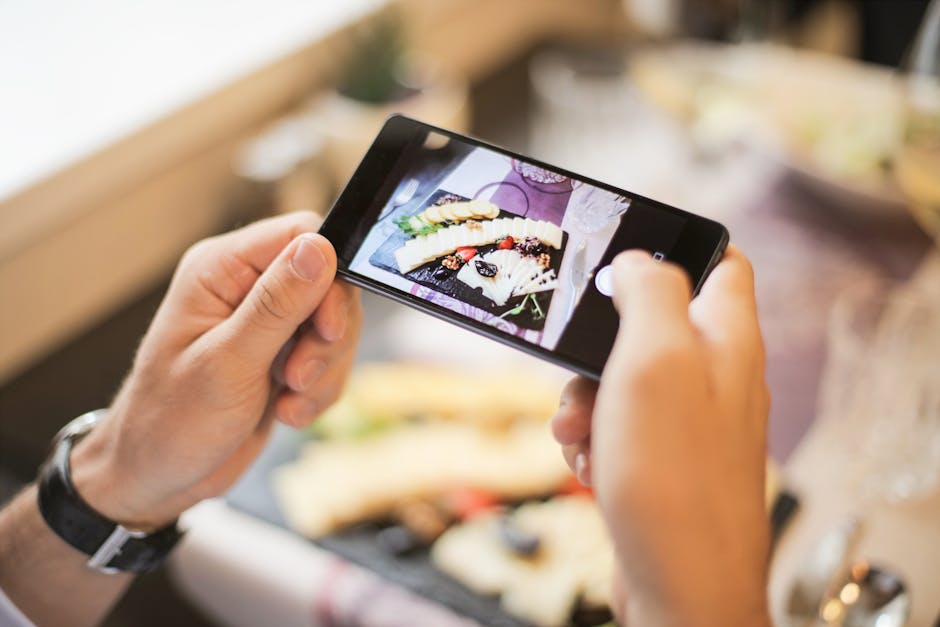
You snap a picture of your plate. The app recognizes the food and estimates portions from visual cues. This is the fastest method for plated meals at restaurants, family dinners, and anything that looks like food. Expect 90%+ accuracy on common dishes and 70-80% on complex mixed plates — close enough for daily tracking. Where photo logging shines: you don't have to know what's in the dish. The AI figures it out.
2. Voice Logging
You say "small bowl of oatmeal with blueberries and a splash of almond milk" and the app parses it into structured entries. Voice is the best method for driving, cooking, or any time your hands are busy. It's also the best method for describing the things photos can't see — like the olive oil you cooked with, or that the coffee had two sugars.
3. Text Logging
You type "turkey sandwich and a small apple" and the AI does the rest — no database search, no portion picker, no tapping through screens. Text is underrated. It's the best method at your desk, in a meeting, or when you just need to jot something quickly. A good text logger uses natural language, not a search field, which means you don't need to know the exact database name for "that protein bar from Trader Joe's."
4. Barcode Scanning
You scan the UPC on the package and the entire nutrition panel populates. Barcode scanning is still the most accurate method for packaged foods and it's essential for tracking ingredients you buy repeatedly. A strong meal logging app should have barcode coverage in the millions of products — across Open Food Facts, USDA FoodData Central, and regional databases — so scans actually resolve on the first try.
The single biggest predictor of whether you'll stick with meal logging is the time-to-log. Under 15 seconds per meal, people track for months. Over 60 seconds, people quit within a week. Pick an app that measures itself by that number, not by database size.
What About the Apps You've Tried?
A quick honest read on the major meal logging apps in 2026.
- MyFitnessPal still has the biggest database but it's also the slowest to log a meal. Database search, portion picker, confirm — expect 90 seconds per entry. The free tier is now aggressively paywalled, and the AI meal logging they added in 2024 still requires too many confirmation taps.
- Lose It! has a cleaner UI and a decent barcode scanner, but the core flow is still built around database search. Their Snap It photo logger works but has limited accuracy on mixed plates.
- Noom isn't really a meal logging app — it's a behavior-change program with logging bolted on. The log itself is a simplified color system (green, yellow, red foods) that doesn't give you the nutrient detail you need if you have any real health goal.
- Cronometer is the best choice if you love manual entry and want extreme micronutrient accuracy. It's the worst choice if you want to log in 10 seconds.
- Yazio and Lifesum are prettier versions of MyFitnessPal with the same fundamental speed problem.
What a Meal Logging App Should Give You Besides Speed
Speed is the gate. Once you're past it, here's what still matters.
Nutrient Depth, Not Just Calories
Calorie-only logging is 2015 thinking. Your app should track at least protein, fiber, and sugar as top-line numbers, and ideally 50+ nutrients underneath. Micronutrient gaps (low magnesium, low iron, low B12) are the silent reason people feel tired even when their calorie math looks fine.
Health Integrations
Your meal log is more valuable when it talks to your other health data. Apple Health and Google Health Connect sync matters — you want your meals to line up with your workouts, your sleep, and your weight trend, not live in an isolated silo.
Recovery from Skipped Days
This is the feature nobody talks about and everybody needs. When you skip two days of logging — and you will — the app should welcome you back without guilt, without red numbers, without a lecture. The whole point is getting back on track, not punishing the lapse.
Protein and GLP-1 Awareness
If you're on Ozempic, Wegovy, or Mounjaro, a generic meal logger will fight you the whole way. You need protein as the hero metric and calorie targets that don't nag you for eating less. Meal logging apps built before 2024 mostly don't handle this well.
How HealthyOne Handles All Four Methods
HealthyOne was built from day one around the premise that meal logging has to take under 15 seconds or it won't survive contact with a real week. All four input methods are built in — photo, voice, text, and barcode — and you pick the fastest one for the moment.
Under the hood, HealthyOne runs on Gemini 2.5 Flash for language and image understanding, with 50+ nutrients resolved per entry. It syncs with Apple Health and Google Health Connect. It has a protein-first dashboard for GLP-1 users, recipe discovery with auto-generated grocery lists, a fasting tracker, and a squad feature for accountability without shame. The paid tier is $7.99 a month with a 7-day free trial and no credit card required.
The best meal logging app is the one you're still using a month from now. That comes down to one number — seconds per meal — and everything else follows.
The Bottom Line
Stop evaluating meal logging apps by database size or macro chart design. Evaluate them by time-to-log. If it takes you longer than 15 seconds to record a meal, the app has already lost. Photo, voice, text, and barcode — the best meal logging apps in 2026 give you all four and let you pick the fastest one for the situation.
Pick the one that gets out of your way. Your day-14 self will thank you.
The meal logging app built for 10-second entries
Photo, voice, text, and barcode — all four meal logging methods in one app. 50+ nutrients per entry. 7-day free trial, then $7.99/month.
Try HealthyOne Free